
Hybrid and EV Battery Replacement Cost: How to Save
Battery replacement can be the biggest repair line item on early EV and hybrid models. Use this framework to make a better sourcing decision.
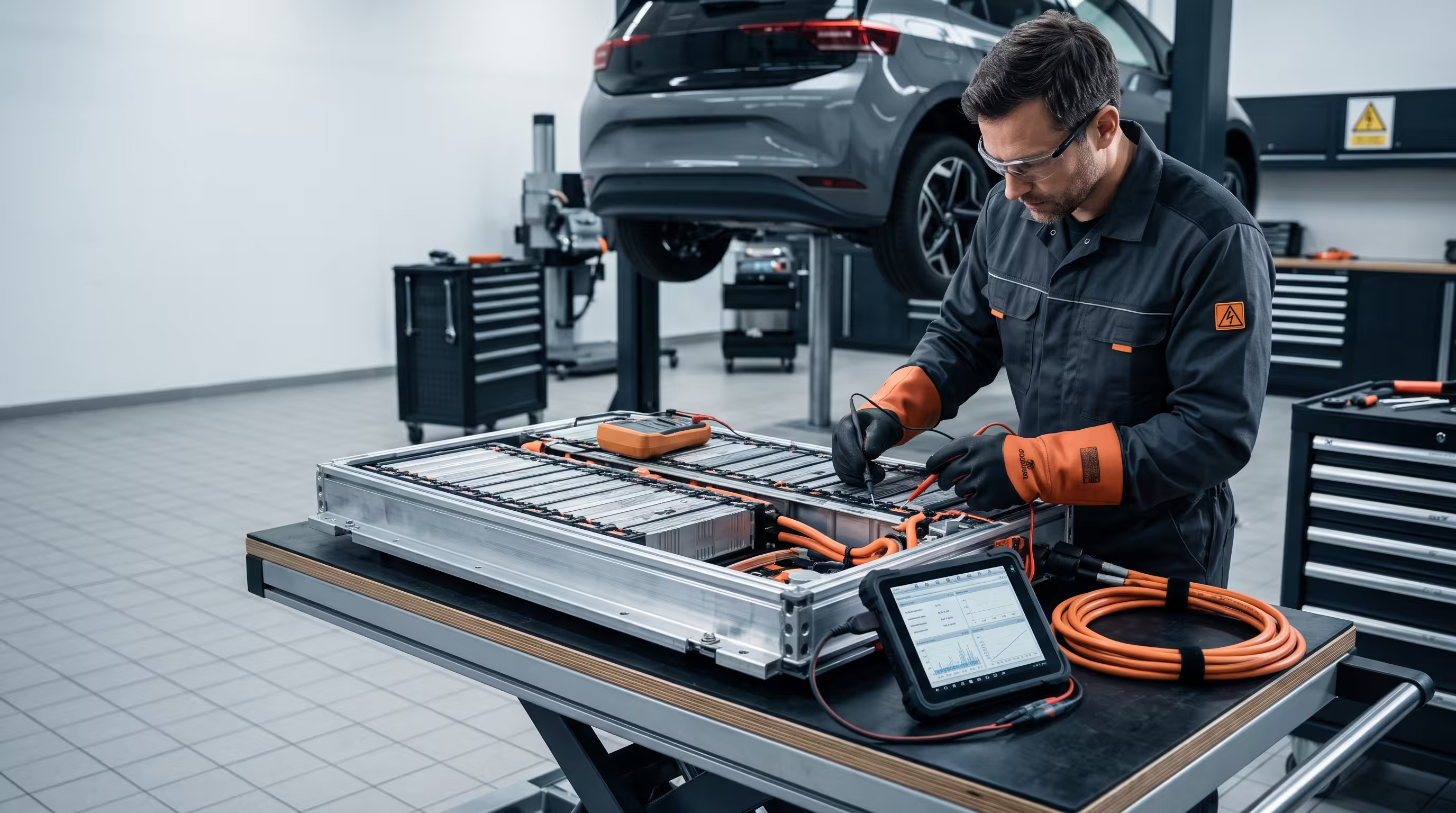
Hybrid and EV battery replacement cost explained: how to diagnose a failing pack, compare new, used and refurbished batteries, and check warranties first. It is written for buyers, DIYers, and workshops who want clearer technical context, more reliable fitment checks, and fewer avoidable mistakes.
In this guide
When battery replacement is truly required
Range loss alone is not enough. Diagnostic evidence should isolate pack condition from charging or thermal system issues.
Battery replacement decisions are often made too early because owners naturally focus on the most expensive component in the car. But range loss, slower charging, or fault messages do not automatically mean the high-voltage pack is finished. The real question is whether the pack itself is degraded, or whether the symptom is coming from balancing, charging hardware, thermal management, software logic, or a single weak module that has not yet made the whole pack uneconomical.
That is why battery work needs better evidence than most conventional repairs. A useful assessment should include state-of-health, module balance, fault history, charging behaviour, and any sign of cooling-system or BMS issues. Without that baseline, owners risk treating every EV warning as a pack failure when the more accurate diagnosis may be narrower and far less costly.
- Confirm state-of-health and module balance with qualified diagnostics.
- Rule out charging hardware and software faults before pack replacement.
- Document baseline performance to evaluate post-repair improvement.
Used battery sourcing risk controls
Used batteries can reduce cost substantially when traceability and test evidence are available.
Used and remanufactured battery sourcing is becoming more credible as manufacturers and large groups invest in battery supply chains, recycling, and standardized reuse pathways. That does not make every used pack a safe bet, but it does mean the market is moving away from purely speculative salvage buying toward traceability, documented health data, and known chemistry families. The quality gap is now less about whether a battery is used and more about whether its history can be verified.
The critical controls are straightforward: documented test results, connector and form-factor compatibility, known storage conditions, and a clear view of who is responsible for commissioning and warranty. High-voltage parts cannot be treated like ordinary body components. A good used battery decision depends on documentation, not optimism, and it should be supported by an installer who understands the specific platform and its software expectations.
- Request test documentation, storage history, and compatibility references.
- Verify part number, chemistry generation, and connector configuration.
- Align installation with a workshop experienced in HV safety procedures.
Cost planning beyond the battery pack
Replacement projects include labor, programming, and potential charger-related updates.
The pack price is only one part of an EV battery job. Transport constraints, safe handling, calibration, software pairing, coolant service, and diagnostic labour can all materially change the real total. On some vehicles, battery-related work also exposes secondary issues such as charger faults or cooling circuit maintenance that were hidden behind the original complaint.
This is why a realistic battery budget needs to separate the part cost from the project cost. A cheaper pack with unclear software compatibility or no installation support can end up costing more than a higher-confidence option. Owners do better when they compare complete repair pathways, including labour and warranty boundaries, rather than focusing only on the headline price of the pack itself.
- Add labor, calibration, and cooling-system service to budget planning.
- Evaluate warranty terms on both the part and installation work.
- Use total ownership horizon to compare used, remanufactured, and new options.
Battery project due diligence before purchase
High-ticket battery purchases should be evidence-led with test records, compatibility proof, and installation planning agreed upfront.
Battery due diligence should look more like aircraft paperwork than casual used-parts shopping. Before money changes hands, the buyer should know what chemistry generation the pack belongs to, how its health was measured, whether the BMS or related software expects a specific revision, and which party is taking responsibility for commissioning the pack in the car. If any of those basics are unclear, the transaction is not ready to proceed.
This diligence is especially important as EV architectures become more sophisticated. Manufacturers such as Stellantis are building increasingly flexible battery and drive platforms, with software-defined behaviour and multiple voltage architectures. That evolution makes compatibility checking more important, not less, because the pack is not just a box of cells. It is part of a broader high-voltage and software ecosystem.
- Request module-level test output and a clear statement of pack health metrics.
- Confirm connector type, BMS compatibility, and vehicle software expectations.
- Align installer responsibilities for transport, commissioning, and post-fit verification.
- Document warranty boundaries between part supplier and installation workshop.
External reference images
These images are hosted by their original publishers. Each image includes a direct source link for attribution and context.

Fiat battery replacement market reference
View original source
Battery teardown visual context
View original source
Stellantis battery-pack architecture reference
View original sourceRelated site resources
These links point to supporting resources such as FAQs, category references, and contact forms when extra context is useful.
FAQ
Is it worth replacing a hybrid battery?
Often yes, when the rest of the car is in good condition: a replacement battery is usually cheaper than replacing the car. Check whether the battery is still under the manufacturer's hybrid battery warranty before paying for one.
Are used EV battery packs safe to buy?
They can be, provided testing data, traceability, and proper high-voltage installation processes are in place.
How much can used packs save compared to new?
Savings vary by model and condition, but used packs can reduce total part cost significantly when fitment is correct.
Should I replace charging hardware at the same time?
Only if diagnostics indicate charger or cable faults. Avoid replacing extra hardware without clear evidence.