
Used vs OEM vs Aftermarket Parts: Which Should You Buy?
Not every part category should be purchased the same way. Use this matrix to decide when used OEM is smart and when new is safer.
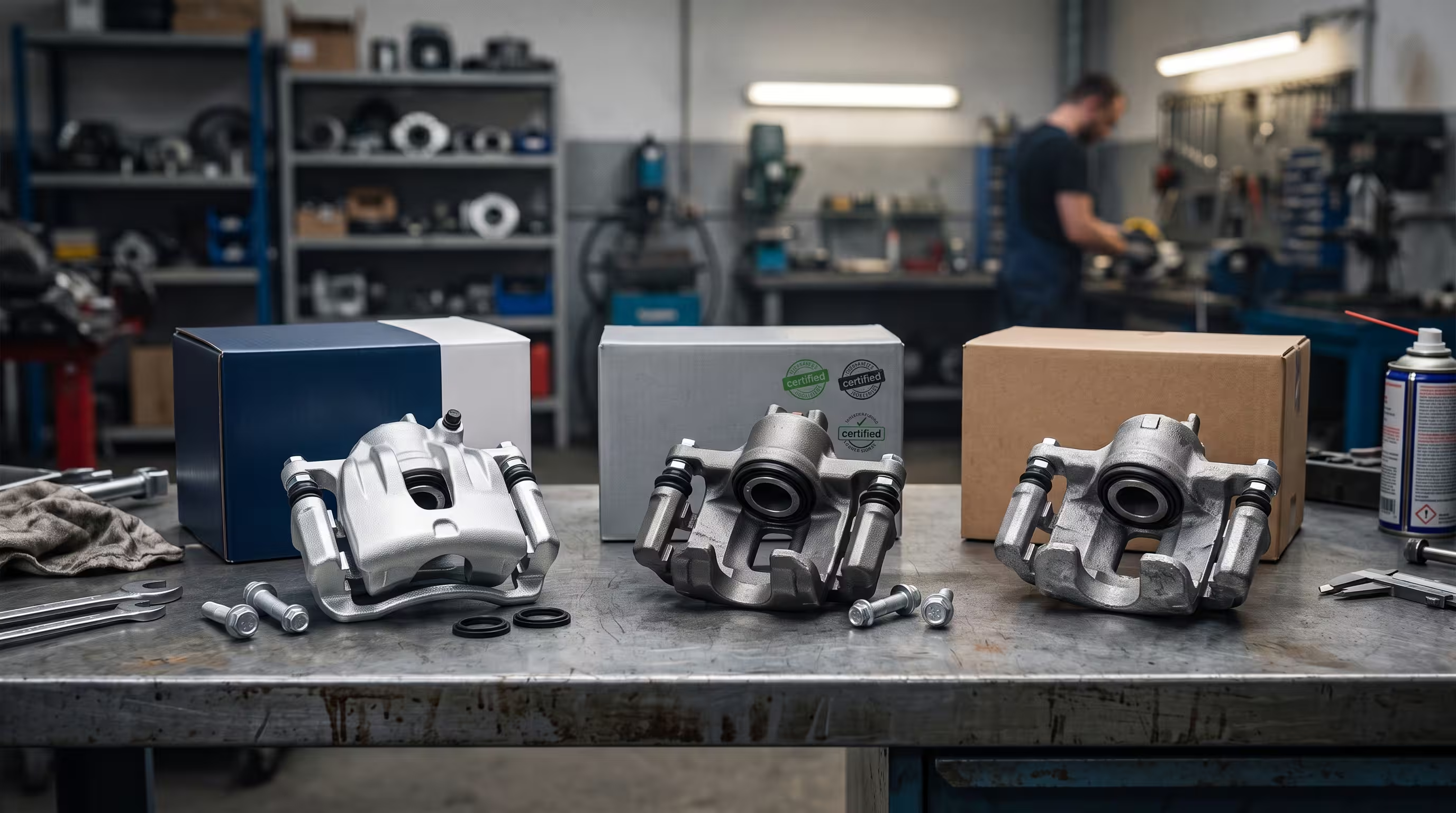
OEM vs aftermarket vs used OEM parts compared on cost, quality, fitment and risk, with clear advice on which parts to buy new and which used parts are worth it. It is written for buyers, DIYers, and workshops who want clearer technical context, more reliable fitment checks, and fewer avoidable mistakes.
In this guide
How quality tiers impact total repair cost
The cheapest upfront option can become the most expensive after labor, delays, and refits.
Parts quality should be judged against the full repair cost, not the invoice line for the component alone. A brake switch or trim panel is one thing; a buried intake component, coded control module, or interior conversion that takes hours to fit is another. In those jobs, a cheaper part that fails fitment or arrives in poor condition can erase any saving the moment labour has to be repeated.
The useful distinction from recent OEM-versus-aftermarket guidance is not simply expensive versus cheap, but specification confidence versus uncertainty. Genuine and OE-level parts reduce uncertainty on sensitive jobs, while reputable aftermarket or used OEM can be entirely reasonable when the part category is forgiving. The strongest decision-makers separate low-risk cosmetic or wear items from high-risk components that are expensive to install twice.
- Choose by total install cost, not part price alone.
- Include coding, adaptation, and alignment costs in your decision.
- Prefer verified fitment on high-labor jobs such as engines or interior conversions.
Parts that are usually safe to buy used
Many body and interior components retain high value as used OEM when condition and mounting points are verified.
Used OEM makes the most sense where factory fit and finish matter more than absolute newness. Seats, trim panels, tail lamps, door cards, mirrors, and many body panels often outperform generic alternatives because they were built for the exact platform from the start. When these parts are structurally intact, the main evaluation becomes cosmetic condition, hardware completeness, and the presence of the correct mounts and connectors.
The inspection burden still matters. A seat with torn bolsters, a lamp with broken tabs, or a bumper with hidden repair work is not a bargain just because it is original. The strength of used OEM lies in geometry and compatibility, not in automatic quality. That is why close photos, donor-vehicle details, and a check for included ancillaries are more important than a seller simply describing a part as genuine or original.
- Seats, trim, doors, tail lamps, and many body panels can be excellent used buys.
- Request close-up photos of tabs, wiring pigtails, and mounting areas.
- Match color/trim codes for interior sets to avoid visible mismatch.
Parts where caution is required
High-wear and safety-critical items should follow stricter sourcing rules.
The categories that deserve the most caution are the ones where failure is expensive, dangerous, or hard to diagnose. Braking hardware, restraint-related components, high-heat emissions parts, and electronics with coding dependencies all carry a narrower margin for error. A poor-quality replacement in these systems may still bolt on, but that does not mean it will behave correctly in service or over time.
This is also where counterfeit or poorly specified parts cause outsized damage. Research on OEM, OE, and aftermarket categories consistently shows that the risk is not the word aftermarket itself, but unknown provenance and weak quality control. Reputable supplier-branded parts can be excellent. Untraceable parts with vague descriptions and no credible references are where the risk compounds.
- Avoid used brake consumables, belts, and unknown wear components.
- For ECUs and sensors, validate software compatibility and coding path first.
- For emissions components, confirm legal and technical suitability for the target market.
Decision framework for workshops and DIY buyers
A repeatable part-tier framework reduces customer disputes and unexpected labor overruns after installation.
The most useful framework is to match the part tier to the consequence of being wrong. If the part is quick to inspect and easy to swap, there is more room to consider used OEM or quality aftermarket options. If the part requires coding, significant dismantling, or directly affects safety or drivability, the tolerance for uncertainty drops sharply and a higher-confidence tier becomes the rational choice.
For workshops, this framework also improves communication. Customers rarely object to a more expensive part when the labour risk and failure consequences are explained clearly. The dispute usually comes later, when a low-confidence choice was made without making the downstream risks explicit. Good parts sourcing is as much a decision process as it is a catalog search.
- Use OEM or genuine for high-labor jobs where refit cost is higher than part-price savings.
- Use quality aftermarket for routine wear components from known brands with traceable part references.
- Use used OEM for interior/body components when condition and mount integrity are documented.
- Avoid unknown low-cost listings without clear origin, photos, and return policy terms.
Comparison table
Quick selection matrix by part category
| Part type | Best value choice | Primary risk | Best for |
|---|---|---|---|
| Body and interior | Used OEM | Cosmetic wear or tab damage | Budget-conscious restorations |
| Electronics (ECU/modules) | Verified used OEM | Coding mismatch | Owners with coding support |
| Wear consumables | New quality aftermarket | Unknown service life | Routine maintenance |
| High-labor assemblies | OEM or verified low-mileage used | Refit labor cost | Reliability-first repairs |
External reference images
These images are hosted by their original publishers. Each image includes a direct source link for attribution and context.
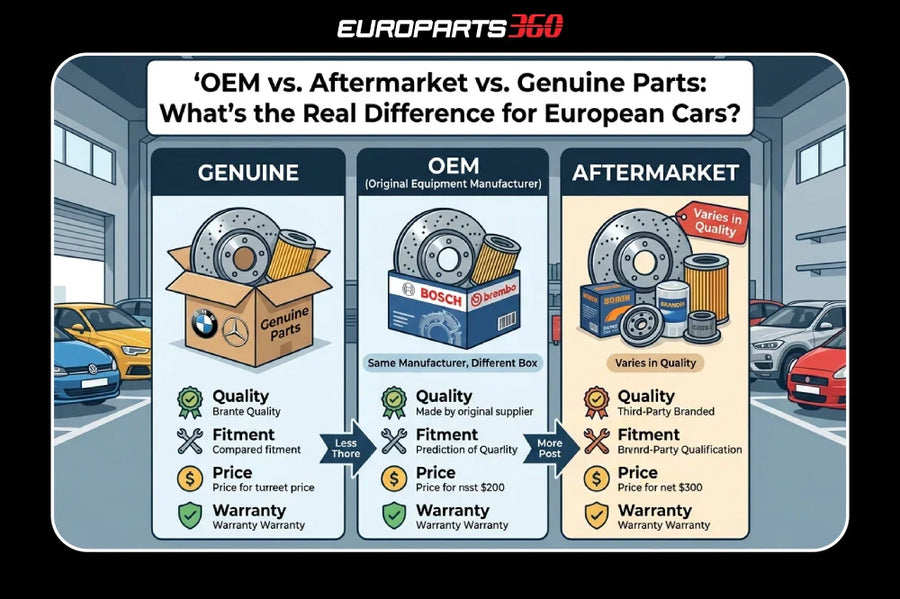
OEM, OE, and aftermarket parts category comparison
View original source
Stellantis circular economy used-parts context
View original sourceRelated site resources
These links point to supporting resources such as FAQs, category references, and contact forms when extra context is useful.
FAQ
What is the difference between OE and OEM parts?
OE (original equipment) parts are the ones fitted to the car at the factory. OEM parts are made by the same manufacturer to the same specification but may be sold in the parts maker's own box rather than the carmaker's. Both are built to the original specification.
Are OEM parts better than aftermarket parts?
OEM parts guarantee the original fit and specification. Quality aftermarket parts from reputable brands can match or exceed OEM for wear items such as brakes and filters and often cost less; cheap unbranded parts are where quality problems concentrate.
Are used OEM parts better than cheap aftermarket?
For fitment-critical components, used OEM often provides better compatibility than low-quality aftermarket alternatives when condition is verified.
Should I buy a used ECU?
Yes, if part numbers, hardware revisions, and coding requirements are validated before purchase and installation.
Which parts should always be new?
Safety and wear consumables such as brake pads, belts, and heavily stressed rubber components are typically safer as new parts.